Key Takeaways
- An ultrasound can help detect gallstones, kidney and liver cysts, thyroid nodules, blood clots, narrowed blood vessels, and fluid buildup.
- An abdominal ultrasound checks organs like the liver, gallbladder, kidneys, and pancreas.
- A thyroid ultrasound shows the size and shape of the thyroid and any growths in the neck.
- A vascular ultrasound uses a technique called Doppler to show how blood moves through your arteries and veins.
- Ultrasound uses sound waves instead of radiation, so doctors often choose it first for soft tissue and organ concerns.
- Pittsburgh Imaging & Wellness offers ultrasound imaging accredited by the American College of Radiology (ACR) at its West Hills and Monroeville locations, with same- and next-day appointments. Request your ultrasound appointment online.
How Ultrasound Imaging Works
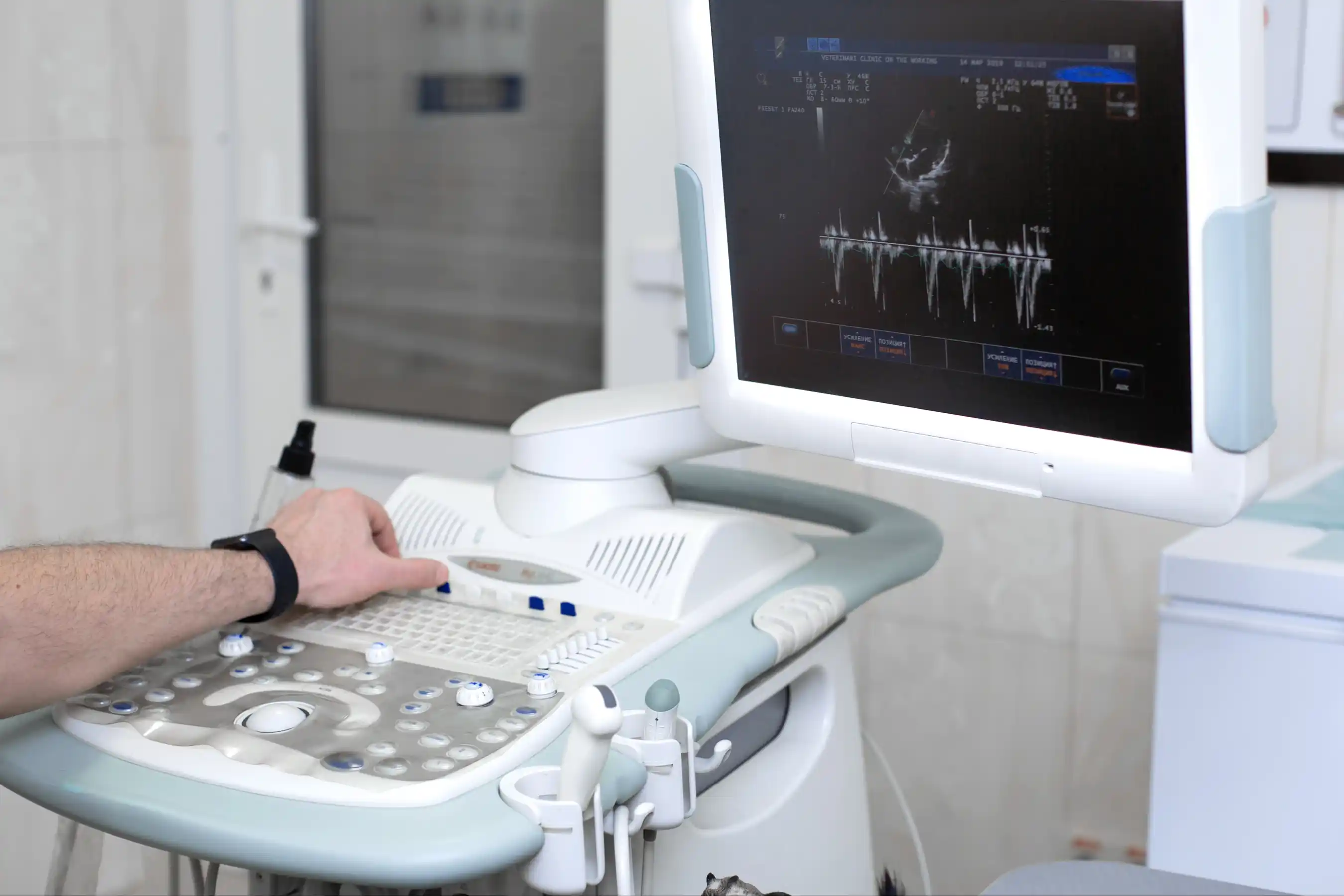
Ultrasound (also called sonography) is one of the most flexible imaging tests available. A technologist moves a small handheld device, called a transducer, across your skin. The transducer sends sound waves into your body. Those waves bounce off organs and tissues and return as echoes, which a computer turns into live images on a screen.
Because the images appear in real time, your care team can see organs, soft tissue, and even blood moving through your vessels. At Pittsburgh Imaging & Wellness, experienced sonographers (technologists trained in ultrasound) perform each exam, and a board-certified radiologist reviews the images. A radiologist is a doctor who specializes in reading medical images. Learn more about the ultrasound services at Pittsburgh Imaging & Wellness.
Common Abdominal Conditions Ultrasound Can Identify
An abdominal ultrasound is one of the most common reasons patients visit Pittsburgh Imaging & Wellness. It gives your doctor a clear look at organs in your belly area. According to the RadiologyInfo guide to general ultrasound from the American College of Radiology and the Radiological Society of North America, doctors use ultrasound to look into pain, swelling, and infection in organs such as the liver, gallbladder, spleen, pancreas, kidneys, and bladder.
An abdominal ultrasound at Pittsburgh Imaging & Wellness can help find:
- Gallstones or an inflamed gallbladder.
- Cysts or tumors in the kidneys, liver, or pancreas.
- The cause of unexplained abdominal pain or swelling.
How to Prepare for an Abdominal Ultrasound
For an abdominal ultrasound, do not eat or drink for 8 hours before your appointment. An empty stomach helps the sound waves reach your organs clearly. Ultrasound waves do not travel well through air or gas, so food and gas in the bowel can block the view.
How Ultrasound Evaluates the Thyroid and Neck
Your thyroid is a butterfly-shaped gland in the front of your neck. It sits close to the skin, which makes it easy to see with ultrasound. The Cleveland Clinic overview of thyroid ultrasound explains that thyroid ultrasound is the most common thyroid imaging test. It can help diagnose:
- Thyroid nodules or cysts (lumps or fluid-filled sacs on the thyroid).
- Goiter (an enlarged thyroid).
- Swollen lymph nodes in the neck.
- Inflammation of the thyroid.
Doctors often order a thyroid ultrasound as a follow-up test. For example, you may need one after unusual lab results, after a nodule shows up on another scan, or to check on a nodule found in the past.
Can a Thyroid Ultrasound Find Cancer?
A thyroid ultrasound cannot diagnose cancer on its own. It can show new or changing growths. If something looks concerning, your doctor may suggest a biopsy, which is a test that removes a small tissue sample for a lab to study.
What Vascular Ultrasound Reveals About Blood Flow
A vascular ultrasound looks at your blood vessels. It often includes Doppler ultrasound, a special technique that measures the direction and speed of blood moving through your arteries and veins. Doppler images can show color patterns that help the radiologist see where blood flows well and where it does not.
According to RadiologyInfo, Doppler ultrasound helps doctors find:
- Blockages to blood flow, such as blood clots.
- Narrowed blood vessels.
- Reduced or missing blood flow to an organ.
Pittsburgh Imaging & Wellness performs vascular ultrasound to check for blood clots and narrowed blood vessels when your provider orders this type of study.
Soft Tissue and Fluid Collection Detection
Ultrasound gives a clear picture of soft tissues that do not show up well on X-rays. That makes it useful for checking:
- Fluid collections, such as a buildup of fluid under the skin or around an organ.
- Lumps, bumps, or other soft tissue changes.
- Areas of swelling where your doctor wants a closer look.
Ultrasound Types at a Glance
| Ultrasound Type | What It Looks At | What It Can Help Find | How to Prepare |
|---|---|---|---|
| Abdominal | Liver, gallbladder, kidneys, pancreas, spleen | Gallstones, cysts, tumors, causes of pain or swelling | No food or drink for 8 hours |
| Thyroid | Thyroid gland and nearby neck tissue | Nodules, cysts, goiter, swollen lymph nodes | Usually no special prep; your team will confirm when you schedule |
| Vascular (Doppler) | Arteries and veins | Blood clots, narrowed vessels, reduced blood flow | Instructions given when you schedule |
| Soft tissue | Areas under the skin | Fluid collections and soft tissue changes | Instructions given when you schedule |
Why Ultrasound Is Often Chosen for These Concerns
Doctors often order ultrasound first because it is simple, safe, and fast. Here is why it is a common choice:
- No radiation. Ultrasound uses sound waves, not X-rays.
- Real-time images. Your care team can watch organs and blood flow as they move.
- Comfortable. Most exams are painless and need no needles or shots.
- Quick. Most ultrasound appointments at Pittsburgh Imaging & Wellness take 30 minutes or less.
- Widely available and affordable. RadiologyInfo notes that ultrasound costs less than most other imaging methods.
Ultrasound does have limits. It cannot see inside bones, and it does not work well through air-filled areas like the lungs or bowel. In those cases, your doctor may order another test, such as an MRI scan at Pittsburgh Imaging & Wellness.
Please note: Pittsburgh Imaging & Wellness does not perform transvaginal or obstetric (pregnancy) ultrasounds.
Ultrasound Imaging in Monroeville, PA, and West Hills
Pittsburgh Imaging & Wellness offers ultrasound at two locations across the Pittsburgh area:
- West Hills: 890 Beaver Grade Road, Coraopolis, PA 15108.
- Monroeville: 665 Rodi Road, Monroeville, PA 15235, just off I-376.
Both locations offer ultrasound imaging reviewed by board-certified radiologists. Patients on the east side can visit the Pittsburgh Imaging & Wellness Monroeville location for ultrasound imaging close to home.
Get Clear Answers From an Ultrasound in Pittsburgh
An ultrasound can help your doctor find the cause of pain, swelling, lumps, or blood flow problems without any radiation. Pittsburgh Imaging & Wellness makes it easy to get a fast, accurate scan reviewed by a board-certified radiologist.
Ready to schedule your scan? Request an ultrasound appointment at Pittsburgh Imaging & Wellness in West Hills or Monroeville, and learn more about ultrasound imaging at Pittsburgh Imaging & Wellness.
Frequently Asked Questions
What can an ultrasound detect?
An ultrasound can help detect gallstones, cysts, and tumors in the kidneys, liver, or pancreas, thyroid nodules, blood clots, narrowed blood vessels, and fluid collections. Your doctor uses the results to decide on next steps.
Where can I get a vascular ultrasound near me?
If you live in the Pittsburgh area, Pittsburgh Imaging & Wellness offers ultrasound imaging, including vascular studies, at its West Hills and Monroeville locations. Same- and next-day appointments are available.
Do I need to fast before an abdominal ultrasound?
Yes. Do not eat or drink for 8 hours before an abdominal ultrasound. For other types of ultrasound, the Pittsburgh Imaging & Wellness team will give you instructions when you schedule.
Can a thyroid ultrasound tell if a nodule is cancer?
No. A thyroid ultrasound can show the size, shape, and features of a nodule, but it cannot diagnose cancer. If a nodule looks concerning, your doctor may recommend a biopsy.
How long does an ultrasound take?
Most ultrasound appointments at Pittsburgh Imaging & Wellness take 30 minutes or less. You can go back to your normal routine right after.
Is ultrasound imaging available in Monroeville, PA?
Yes. Pittsburgh Imaging & Wellness offers ultrasound imaging at its Monroeville location on Rodi Road, as well as at its West Hills location in Coraopolis.
